





































You've decided to take the plunge into the trying-to-conceive pool. Good for you! But as you come up for air, you might start feeling a little worried. What if I can't get pregnant? What if something goes wrong? How long will this take?
These nagging fears are completely normal and extremely common, but the good news is that for nine out of 10 women, the stork will arrive without any special medical intervention.
Despite what you might have been told in your middle school health class, pregnancy doesn't happen automatically after having unprotected sex. There are several key steps to getting that bun into the oven, and each one has to go just right.
It all starts with ovulation, when your ovaries release a mature egg that's available for fertilization by sperm. Having sex when you're ovulating — which happens around halfway through your menstrual cycle — gives you the best chance of getting pregnant, so it's worth getting the timing right.
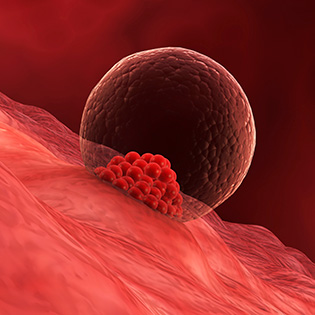
Once a sperm fertilizes the egg, it slowly but surely makes its way into the uterus, all the while growing and dividing. After several days, the fertilized egg implants on the uterus wall, resulting in pregnancy.
This whole process — from sex to implantation — takes between two and three weeks. Still, as most people who are trying to conceive quickly learn, the road to getting pregnant often takes a little longer than that. Here's a look at what you can expect.

How long does it take to get pregnant?
In general, healthy couples have a 20 to 25% chance of getting pregnant during each monthly cycle, assuming you're having sex two to three times a week and without contraception. Over the course of year, 85% of couples who are actively trying to get pregnant will conceive.
That's an across-the-board estimate though, and not every individual couple's timeline is exactly the same. Your age, overall health, reproductive health, and how often you have sex all factor in to how long it will take you to get pregnant. A man's age and health matter too, along with other factors.
How long does it take to get pregnant after going off birth control?
Wondering if your body needs time to adjust to being off the pill before you'll be able to conceive? The answer isn't exactly clear-cut, but in most cases, going off hormonal birth control shouldn't throw too much of a wrench in your pregnancy plans.
Hormonal birth control methods like the pill, patch, ring, or hormonal IUD all work by turning off hormone signals, mainly to stop ovulation (the release of an egg from one of the ovaries). Once you stop using this form of contraception, those hormones turn back on and you go back to ovulating.
Most women start getting regular periods again — a sign of ovulation — within a few weeks after stopping birth control.[1] But for others it can take up to three months, and that's completely normal. (Good to know: Birth control shots like Depo-Provera often have a longer timeline. Most women won't get pregnant for at least 12 to 14 weeks after their last shot, but it could take as long as a year or two.)
“I was on a pill for 4+ years. Always consistent with it, regular period. I came off it and had a successful pregnancy on the 2nd cycle,” reports What to Expect Community mom JDel21.
Just like there's some variation in when your period will come back after stopping birth control, some women take a little longer than others to conceive. Some research shows that having taken oral contraceptives doesn't affect a woman's ability to get pregnant in the short- or long-term. But other research found that going off the pill is tied to a slight delay when compared with barrier methods.
What are my odds of conceiving by age?
Overall, you'll very likely become pregnant within several months of enjoyable effort. It may happen faster if you know your cycle and learn to identify when you're ovulating. Eating well and staying healthy can play a role, too.
That said, age does affect your chances of getting pregnant. Healthy couples in their 20s have around a 1 in 4 chance of conceiving during any monthly cycle, while the chances for those in their early 30s are around 1 in 5.
And while fertility does decline quickly starting in your mid-30s, your odds of having a baby are still far from nil. But the odds drop to around 1 in 10 by age 40. (That said, plenty of women still get pregnant in their 40s. Look at What to Expect Community mom AmmaInDC: “I had my babies at 41, 43, and am expecting #3 at age 45!” she says.)
How can you improve your fertility and increase your chances of getting pregnant each month?
The best way to give your body a boost in the baby-making department is to focus on your health. So make an effort to get in the best shape possible by doing things like:
- If you smoke, quit. It'll improve your odds of conceiving, and give your baby the best start in life when you do become pregnant.
- Eat right. Some research suggests that certain dietary patterns can reduce the risk for infertility. Aim to eat more plant-based sources of protein and iron and fewer animal-based ones (like lentils instead of beef), choose whole grains and other sources of fiber, and reach for healthy sources of fat like avocado and nuts.[2]
- Aim for a healthy weight. Being overweight or underweight can both affect hormones involved in fertility.
- Take a prenatal vitamin. Not only will it protect your baby's health when you become pregnant, it could increase your odds for conceiving in the first place.
- Make time for stress relief. Unchecked tension and anxiety can impair fertility. Try yoga, meditation, or any other practice that helps you unwind.
- Test out couples' acupuncture. Some research has found it may improve both male and female infertility.
- Have sex often. Try to get busy every one to two days if you can. More sex when you're fertile means more chances of getting pregnant.
How long to try to get pregnant before seeing a specialist
Talk with your doctor if you're under 35 and haven't conceived after a year of actively trying, or if you're over 35 and haven't conceived within six months.[3]
At least half of couples who are evaluated for suspected infertility will end up, after treatment, with a successful pregnancy. A reproductive endocrinologist or other specialist can help determine where the problem lies and how to fix it or get around it.
Trying to get pregnant? You don’t have to figure it out alone. Download the What to Expect app for tools, insights, and a supportive community of parents-to-be.
 Yes
 No


