





















Potty training tends to loom large in parents’ minds: It’s a major milestone that can be both exciting and a bit fraught. Plus it can feel somewhat confusing, since kids are physically and mentally prepared to train at a wide range of ages.[1]
You can still count on a number of potty training readiness signs that’ll show you your toddler is up for ditching the diapers.
Try to forget that your neighbor’s toddler was potty trained at 18 months and focus on your own child’s signals. To help, here are some of the common potty training readiness signs that might indicate your little one is up for saying good-bye to those diapers once and for all.

Your toddler is drier for longer
Are you changing fewer wet diapers that you used to? A toddler who stays dry for at least two hours during the day — for example, after his usual nap — is physically ready to try training. (Keep in mind that until the age of about 20 months, kids pee so frequently that it may be unrealistic to expect they can control their bladders. But every kid is different!)
“I think the biggest sign was going longer lengths of time with a dry diaper. I would go to change her after two to three hours and she'd be dry,” says What To Expect Community member MamaLager. “Also, I was tired of fighting her every diaper change just because she didn't want her diaper changed. I took that as a big sign of her wanting more independence.”
Your toddler is showing independence
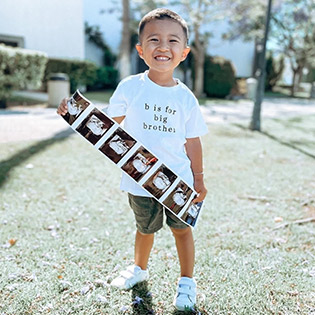
Got a tot who demands to do everything on his own? Whether he’s gung-ho to feed himself or throw a ball, a strong desire for independence could be another potty training signal. Wanting to sit on the potty like his older sibling is another indicator that he may be ready to be potty trained too.


He can follow simple directions
If "hand me that book, please” or “hold this toy” result in the proper action from your toddler, it means he’s able to follow easy directions. This is one more potty training readiness sign.
Understanding the process of pulling down pants, sitting on the potty, and then trying to go are all a part of learning to train successfully.
He poops on schedule
Back in the hazy days of infancy, your baby’s bowel movements showed up around the clock. But as a bigger kid, your toddler's poop may be more predictable. Whether he has one in the morning, after meals or right before bed, a regular rhythm will help you anticipate when to pull out the potty[2] — and thus boost his likelihood of success.
Want to set your tot up for success with potty training? Find expert tips, advice from parents, and more in the What to Expect app.
He’s interested in the process
A little shadow who tags along as you enter the bathroom to use the toilet could be another indicator that your toddler is ready to potty train.
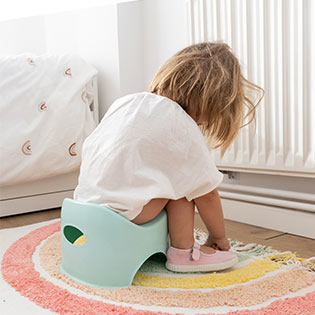
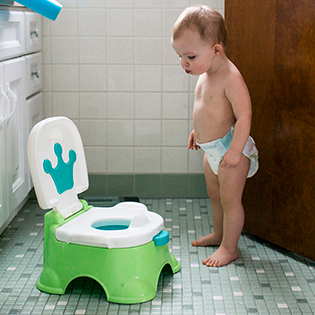
And if he’s keen to sit still for stories about potty training, asks about wearing real underwear, or wants to sit on the toilet or mini chair himself, you’ve got a prime candidate for training.
“I always found it helpful to get the little potty out and start introducing them to it in a no pressure way even before they showed readiness,” suggests What To Expect Community member HopLittleBunnies. “They’d sit on it when they wanted to and familiarize with it. If they started to have multiple successes when they chose to sit on it, then we would get more consistent with it.”
Your tot announces his pee and poop
Improved verbal skills, even if they’re still toddler-speak (“I poo now”), mean your toddler is in tune with his body, another potty training readiness signal. Others kids communicate through less verbal means — say, by retreating to a corner or producing a preemptive grunt.
No matter which type of sign you notice, a tot who’s aware of his own body's functions is likely ready for potty training.
Your child doesn’t like being wet or dirty
At some point, most toddlers go through a (fleeting) stage when they're averse to personal messes — they're bugged by errant crumbs and sticky fingers, and yes, eager to escape their dirty or wet diapers as soon as possible.
If and when your child shows a distaste for diapers, jump on it: It's a golden opportunity to start potty training.
Your toddler can undress himself
Tying his own shoes is well down the road, but the ability to deal with other clothing items happens much sooner. If your toddler can handle his pants and underwear (as in pull them up and down), he’s displaying a sign that he’s ready to train on the big-boy potty.
To make it easier, be sure to dress him in stretch, elastic-waist pants and avoid having him wear costumes, which are hard to get on and off.
He can physically use the potty
The process of potty training is pretty physical, which means your toddler will need to show that he can walk to the bathroom, undo his clothes, sit on the potty and then stay there while he tries to go. Patience and the ability to do these gross-motor tasks are more potty training readiness signs.
It may seem as if potty training will take forever, but know that the timeframe varies for each child. For now, keep an eagle eye out for these potty training readiness signs so you can pick the best moment to work with your tot. Soon enough, his diapers will be a thing of the past.
 Yes
 No


