











































Throughout your pregnancy, your health care practitioner will test your urine for several common pregnancy complications, including gestational diabetes, preeclampsia, and urinary tract infections. It's important to identify markers for these conditions early on so that you can receive the right treatment as soon as possible.

What do urine tests detect during pregnancy?
Urine tests during pregnancy measure levels of glucose, protein, and red and white blood cells to check for:[1]
- Diabetes. High glucose (sugar) levels in your urine may indicate pre-existing type 1 or type 2 diabetes or, later on in pregnancy, gestational diabetes (GD). Gestational diabetes is also tested for with a glucose (blood sugar) screeningbetween weeks 24 and 28 of pregnancy.
- Preeclampsia. Protein in your urine can be a sign of preeclampsia, a condition marked by high blood pressure during pregnancy.
- Urinary tract infections (UTIs). If you have symptoms of a UTI, your practitioner will look for red or white blood cells in your urine.
- Dehydration. Dark, tea-colored urine may mean you need to drink more fluids. Dehydration and UTIs are both common causes of preterm contractions, but both are treatable, and dehydration can be prevented by drinking plenty of fluids throughout the day.
Testing schedules vary by office. Your practitioner may check your urine regularly at your prenatal checkups (at each visit or in each trimester, for example), or they may test early in pregnancy and then again if there's a potential problem.
"This is my sixth baby. Sometimes it's every appointment, sometimes intermittent, and sometimes just once at the beginning," says What to Expect Community mom DJELA.
How are prenatal urine tests done?
You'll provide the sample, so strategically up your water intake before your visit. For the most accurate results:
- Wash your hands and wipe your labia clean from front to back (usually with a provided wipe).
- Start peeing in the toilet.
- Catch the urine midstream in the collection cup.
- Fill to the indicated line (usually about 1 to 2 ounces).
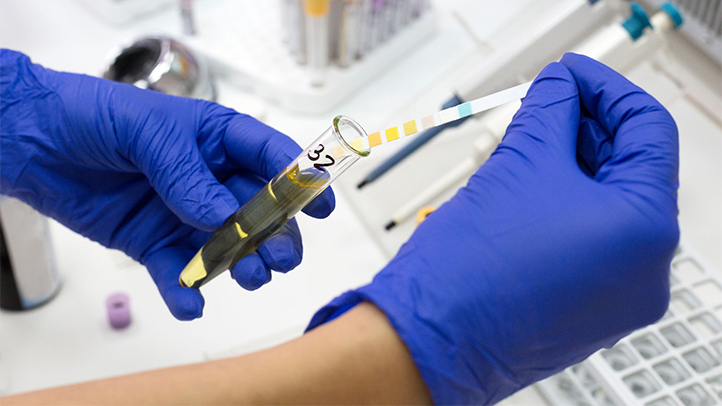
A nurse or technician will dip a test strip into the sample or place a few drops of urine onto testing strips to check for sugar, protein, or blood cells. A color change indicates a positive test. Sometimes the sample is also examined under a microscope.
"I always drank a large bottle of water on my way there," says Community mom andijmac. "I usually had to pee by the time I got there."
Keep track of your appointments, track your pregnancy, and connect with other moms with the same birth month on our free What to Expect app.
What does it mean if I have glucose in my urine?
Glucose in your urine may be a sign of gestational diabetes — but try not to worry. Many women have glucose in their urine at some point during pregnancy, especially after consuming sugary foods or drinks. If you continue to have glucose in your urine, your practitioner will recommend further screening.
A glucose screening — which is a blood test — is routinely done between week 24 and week 28 of pregnancy, but your practitioner may test you earlier if you have risk factors for gestational diabetes. Those include:
- Being overweight
- Having a condition like PCOS
- Having a history of diabetes in your family
- Experiencing gestational diabetes in a previous pregnancy[2]
If your glucose screening shows elevated levels of glucose, your doctor may order a glucose tolerance test, which is will give you an official diagnosis.
What does it mean if I have protein in my urine during pregnancy?
Protein in your urine can signal a urinary tract infection (UTI), kidney issues, or other conditions. After week 20, it may indicate preeclampsia, especially when combined with high blood pressure.
To evaluate for preeclampsia, your practitioner may also check your liver enzyme levels and blood platelet levels. If diagnosed, they'll guide you on how to manage the condition safely. Regular prenatal care will be key to protecting both you and your baby.[3]
What does it mean if I have a UTI during pregnancy?
A urinary tract infection (UTI) is a bacterial infection anywhere along the urinary tract. During pregnancy, UTIs are more common in part because rising hormone levels relax the muscles of the urinary tract, making it easier for bacteria to enter and grow.[4]
It's very important to identify and treat a UTI in pregnancy, because an untreated UTI can lead to pregnancy complications such as preterm labor.
A urine test checks for red and white blood cells (also known as leukocytes), which may indicate infection. To confirm, your practitioner may send a sample for a urine culture.
Luckily, UTIs are typically easy to treat with pregnancy-safe antibiotics. More serious kidney infections may require IV antibiotics at the hospital.
Are there any risks of urine tests during pregnancy?
There are no risks to you or your baby from prenatal urine tests. Although the mechanics of peeing into a plastic cup get pretty interesting in your ninth month, just do your best and go with the flow!
 Yes
 No


