






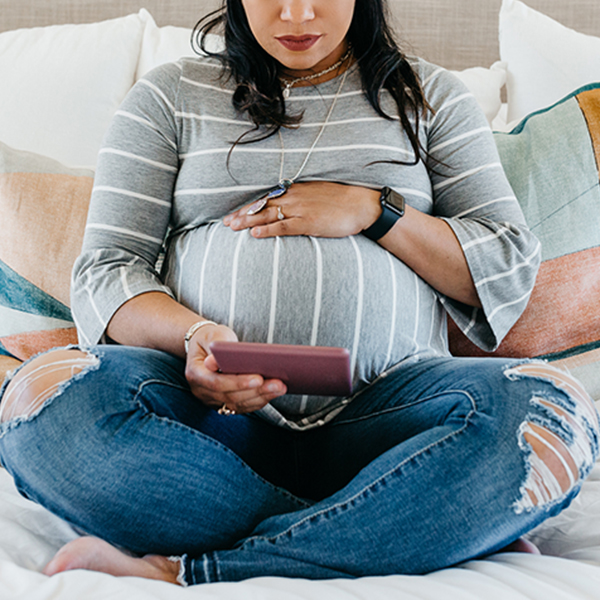





























Women go through a range of physical and emotional changes during pregnancy. Some are hidden from view, but others — like your changing belly and skin — are out there for all the world to notice. Brown, reddish, and purple blotches, patches, lines, and mottling on your skin are some of the most visible symptoms of pregnancy.

When does skin discoloration start during pregnancy?

Skin discoloration is extremely common at all stages of pregnancy, affecting about 90% of expectant women. So don't think you're the only one dealing with it, and know that it can happen during any of the three trimesters. It doesn't usually appear overnight, but comes on gradually as your pregnancy progresses.
Always check in with your practitioner about any skin changes you notice just to be safe. But generally skin discoloration, particularly redness on the hands and soles of your feet, is a normal part of pregnancy.
You might also notice the darkening of your areolas and the skin under your arms and between your thighs, as well as the linea nigra. Your freckles and moles might look darker, and you might have melasma, "the mask of pregnancy."[1]
Women with dark skin may notice these changes during pregnancy more than light-skinned women, but for all moms, the marks should fade after delivery.
What to Expect Community parent Honeywax has skin discoloration on her neck and underarms: "I recently noticed it's a bit darker — idk if I'm losing my mind?!"
Skin changes are just the tip of the (pregnancy) iceberg! The What to Expect app has support and expert guidance about everything happening to your body.


What causes skin discoloration during pregnancy?
Pregnancy hormones (of course) may contribute to skin changes, though some experts claim that your diet during pregnancy may also make a difference. Recent research also suggests that heat may be another contributing factor.
What can I do about skin discoloration when I'm pregnant?
While there's not much you can do to prevent hormonal fluctuations, here are a few smart steps you can take to protect your skin from damaging UV rays that may make skin changes more noticeable:
- Apply sunscreen with an SPF of 30 or higher on your skin every day, even if you aren't going outside. Plenty of the sun's rays come in through the window and can affect your skin. Broad-spectrum formulas, which protect against both UVA and UVB rays, are best. (Pregnant women of color may find that many broad-spectrum formulas are too pasty; look for ones made with clear zinc or that are tinted, which are less likely to look pasty or ashy on dark skin tones.)
- Keep your skin under wraps. In addition to using sunscreen, wear a hat with a visor that shades your face, and pull out those long sleeves if it's not too hot outside.
- Get enough folic acid. Some experts believe that discolorations are linked to a folic acid deficiency. Make sure you're getting enough through your diet and/or in your prenatal supplement.
- Stay cool. Avoid hot baths and showers, and periodically hold a cool, damp washcloth to your face (like after exercising) or splash your face with cold water if you feel yourself getting flushed.
Can I prevent skin discoloration during pregnancy?
If you are vigilant about staying out of the sun — and away from windows and glaring light from other sources — you can definitely prevent some skin darkening and discoloration. Hormonal skin changes, not so much. But you knew that already.
When can I expect my skin to go back to normal?
Most of your darker skin patches, lines, and blotches will start to fade after delivery, but some may remain.[2] Try to think of them as beauty marks, but talk to your dermatologist if they really bother you. And don't worry; these skin color changes won't have any effect on your baby.
 Yes
 No


